

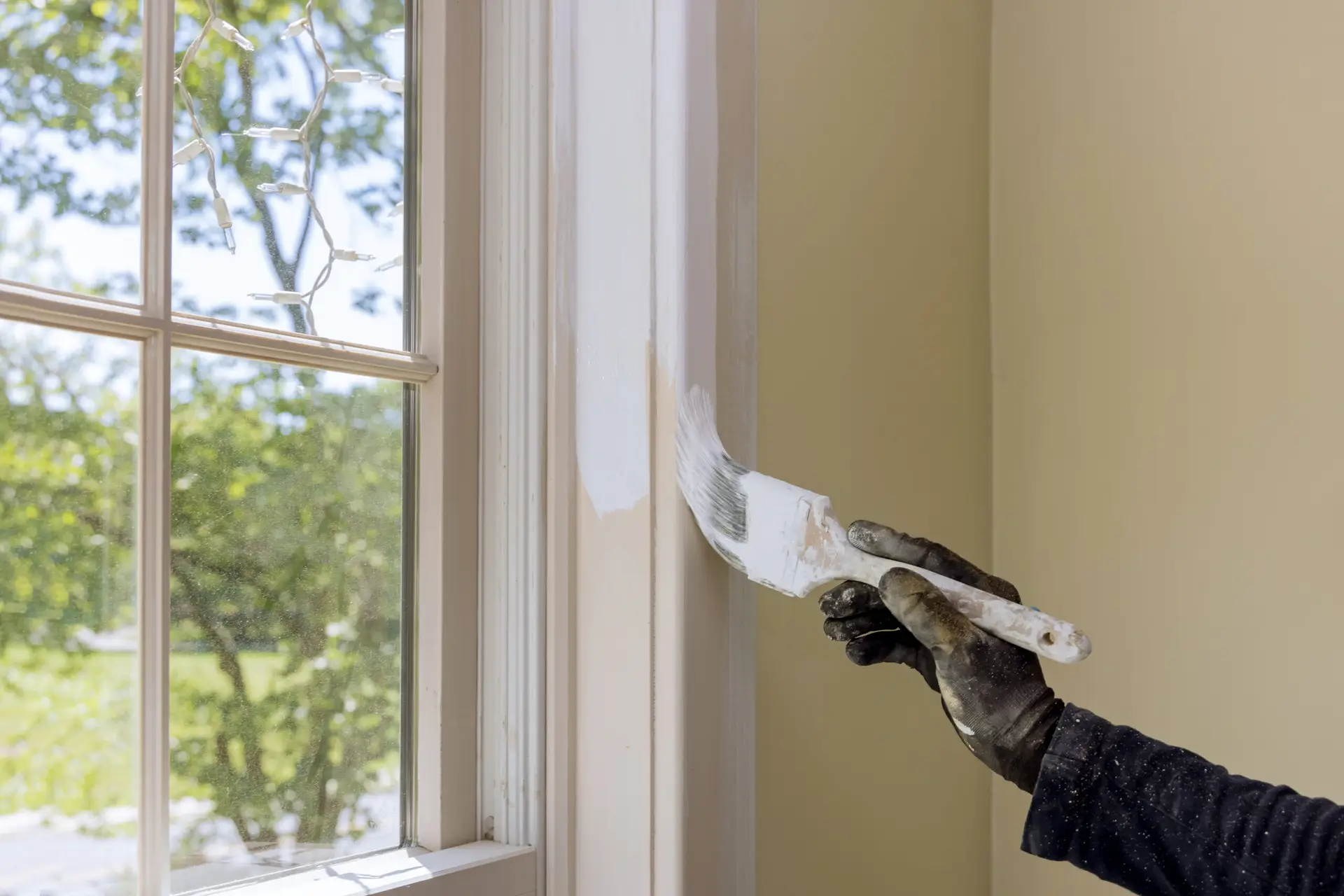
The color of your interior doors and trim is the foundation of your home’s aesthetic. These architectural details act as frames for your walls and floors, making their color choice essential for achieving a harmonious and polished look.
Choosing Colors That Match Your Home’s Style
The style of your home should guide your color choices, ensuring continuity from room to room.
Modern Homes: Black, Charcoal, Deep Neutrals
Modern and contemporary designs thrive on sharp lines and bold simplicity.
- Black (e.g., Tricorn Black, Wrought Iron): Used for interior doors, particularly pocket or barn doors, to create a powerful focal point and ground a minimalist space.
- Charcoal or Deep Gray: Offers the dramatic contrast of black without the intensity, pairing beautifully with pale walls and concrete-look floors.
- Trim: Often painted the same color as the walls (monochromatic) or a crisp white to emphasize the clean, uninterrupted lines of the architecture.
Traditional Homes: White, Cream, Soft Gray
Traditional, Colonial, or Farmhouse styles rely on classic contrast and warmth.
- Crisp White (e.g., Extra White, High Reflective White): The enduring standard for trim, providing a clean contrast against darker wall colors, emphasizing crown molding and baseboards.
- Cream or Ivory: Ideal for homes with warmer tones, natural wood floors, or historic plaster walls. These colors prevent the trim from looking stark or cold.
- Soft Gray (e.g., Pale Silver): A sophisticated neutral that adds depth while maintaining a classic feel, often used on trim in formal living areas.
Transitional Interiors: Warm Whites, Greige
Transitional style—the blend of modern and traditional—allows for more flexibility and subtle variation.
- Warm Whites (e.g., Swiss Coffee, Alabaster): These whites have a touch of yellow or brown undertone, making the room feel cozy and inviting without sacrificing brightness. They pair well with natural wood furniture.
- Greige (Gray-Beige): A popular neutral for walls that can be extended to the trim and doors (though often in a slightly lighter shade) for a seamless, continuous flow between spaces.
Should Doors and Trim Match or Contrast?
The decision to match or contrast depends entirely on the design mood you want to create and the architectural complexity of the room.
Matching for Clean, Cohesive Design
Painting doors and trim the same color (e.g., all Semi-Gloss White) creates visual continuity. This is ideal when:
- You have a lot of complex trim (like coffered ceilings or detailed wainscoting) and you want the details to be cohesive rather than distracting.
- You want the wall color to be the dominant feature, and the trim to simply frame it neatly.
- You are painting smaller rooms where contrasting colors might feel too busy.
Contrasting for Bold, Modern Statements
Contrasting colors draw attention and make a statement.
- Dark Doors, Light Trim: A popular modern look is to paint the door a deep color (black, navy, or hunter green) while keeping the surrounding trim a crisp white. This adds a powerful focal point and visual interest to doorways.
- Colored Trim: Painting the trim a color other than white (e.g., a dusty blue or sage green) creates a historic, layered effect, often utilized in studies or dining rooms.
When to Match Trim to Wall Color
This technique, known as “color drenching” or monochromatic painting, creates an immersive, contemporary feel. When the trim and walls are painted the same color (often in different sheens—flat on the wall, satin on the trim), it:
- Makes the ceiling feel taller by blurring the lines between the elements.
- Works exceptionally well in small, awkward, or oddly shaped rooms to eliminate visual interruptions.
Trending Interior Door & Trim Colors
Current US design trends favor depth, character, and deliberate contrast.
Black Doors with White Trim
This is a classic trend that remains strong. Black interior doors instantly elevate a home, lending a designer touch and providing a sophisticated anchor point. They pair perfectly with traditional white trim and gold or brass hardware.
Monochromatic Color Drenching
This trend involves painting everything—walls, trim, and sometimes the ceiling—the same color. This is particularly popular with deep, moody hues like deep navy or forest green in a home office or bedroom, creating a cozy, enveloped feeling.
Soft Greens and Blues for Character Homes
Instead of just white, soft, muted colors are being used to accent the trim in specific rooms:
- Sage or Muted Olive Green: Excellent for dining rooms or kitchens, paired with a creamy white wall.
- Dusty Blue: Adds a subtle coastal or traditional character when used on doors and window casings.
Best Finishes for Doors and Trim
While color is visual, the finish determines durability and cleanability.
Semi-Gloss for Durability
Semi-Gloss is the undisputed champion for utility and lifespan. Its high sheen reflects light and highlights the architectural molding, but more importantly, the hard enamel makes it resistant to scratches, scuffs, and fingerprints, making it effortless to wash.
Satin for Softer Elegance
If you find semi-gloss too reflective, Satin is the best alternative. It still offers vastly superior durability compared to flat or eggshell wall paint but delivers a warmer, softer appearance. It is a good choice for minimizing the appearance of minor imperfections in older trim work.
FAQs
“Do all trims in a house need to be the same color?”
No, but consistency is recommended for flow. You should maintain the same color and sheen for the trim (baseboards, crown molding) throughout common areas (living room, hallways). However, you are free to choose a different, often bolder, color for doors or trim in private spaces (bedrooms, bathrooms, offices) to give them individual character.
“Does white trim go with everything?”
Almost always. White trim is universal and serves as a neutral boundary that works with every wall color imaginable. The only necessary consideration is the undertone of the white. A cool, blue-based white looks best with cool grays and blues, while a warm, yellow-based white looks best with beige and earth tones.
“Which door colors improve resale value?”
Neutral and classic colors generally improve resale value because they appeal to the broadest range of buyers. For interior doors, this means:
- Classic White: Always safe, clean, and expected.
- Muted Neutrals (Greige, Pale Gray): Offer sophistication without alienating buyers.
- Black/Deep Charcoal: Can add value in modern, upscale markets as a trendy, high-impact feature.
Choosing the right colors is just the first step. The perfect application is what truly transforms your home.
Contact Deluxe General Services for expert color consultation and professional painting services to ensure your interior doors and trim achieve a flawless, high-durability finish.