

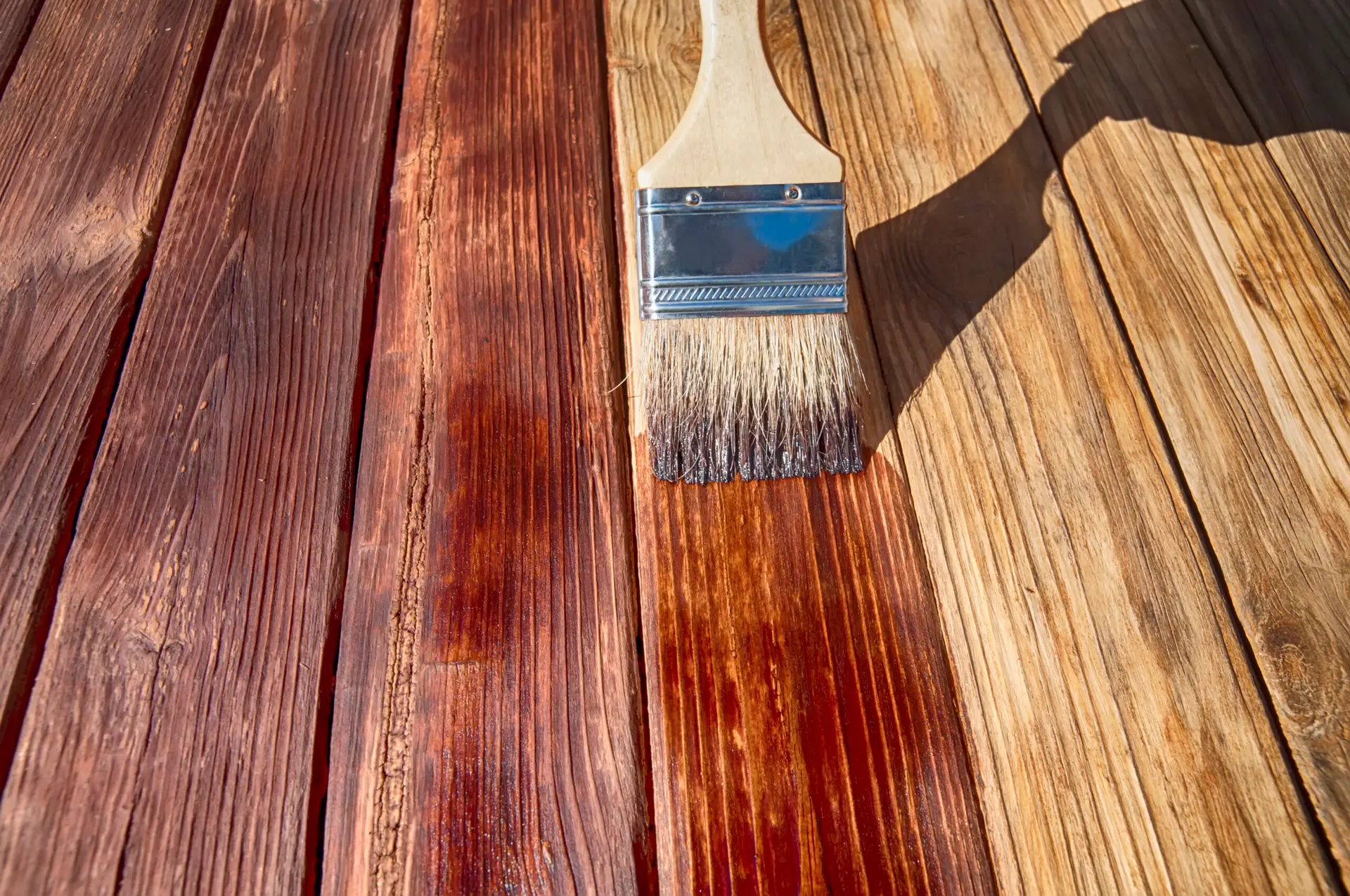
A wooden deck is a beautiful and functional extension of any home, providing an inviting space for relaxation and entertainment. However, continuous exposure to sun, rain, and foot traffic can quickly take its toll, leading to faded colors, splintering wood, and even rot. Staining your deck is not just about aesthetics; it’s a vital protective measure that prolongs its life and maintains its beauty. Delux General Services offers this comprehensive guide on how to properly stain a deck, ensuring a durable, vibrant, and long-lasting finish that will protect your investment for years to come.
Why staining your deck is important
Staining a deck goes beyond mere cosmetic enhancement; it provides crucial protection against the elements and wear.
- UV Protection: The sun’s ultraviolet (UV) rays are one of the biggest culprits of deck deterioration. UV exposure breaks down the wood’s lignin, leading to graying, fading, and eventual surface degradation. Stains, especially those with pigments, act like sunscreen for your deck, blocking harmful UV rays and preserving the wood’s natural color.
- Moisture Protection: Water is another major threat. Rain, humidity, and melting snow can penetrate untreated wood, causing it to swell, crack, warp, and, most critically, become susceptible to rot and mildew growth. Stains (especially penetrating oil-based ones or film-forming solid stains) repel water, preventing it from soaking into the wood fibers.
- Mold and Mildew Prevention: Moisture, combined with organic matter (like dirt and leaves) on the deck surface, creates an ideal breeding ground for mold, mildew, and algae. Many deck stains contain mildewcides that inhibit this growth, keeping your deck looking cleaner and preventing wood decay.
- Prevents Splintering and Cracking: As wood repeatedly wets and dries, it undergoes cycles of expansion and contraction. This stress can lead to surface cracks (checking) and splintering, making the deck unsafe and less appealing. Stains help stabilize the wood’s moisture content, reducing these damaging effects.
- Enhances Appearance: Stains bring out the natural beauty of the wood grain, add rich color, and provide a fresh, well-maintained look that boosts your home’s curb appeal and value.
- Extends Deck Lifespan: By protecting against UV, moisture, and biological growth, staining significantly extends the functional life of your deck, delaying the need for costly repairs or full replacement.
Choosing the right stain
Selecting the appropriate type of stain is crucial for achieving your desired look and protection level.
- Transparency Levels:
- Clear Sealers: Offer minimal UV protection and no color. They primarily provide water repellency. Best for naturally beautiful wood you want to keep its original look, but requires frequent reapplication.
- Transparent Stains: Contain a small amount of pigment. They provide some UV protection while allowing the wood grain to show through prominently. They enhance the natural color of the wood.
- Semi-Transparent Stains: Contain more pigment than transparent stains, offering better UV protection and more noticeable color. They slightly obscure the wood grain but still allow some of it to be seen. A very popular choice for balancing protection and natural beauty.
- Semi-Solid Stains: A step above semi-transparent in pigment content. They provide substantial color and UV protection, largely obscuring the wood grain but still allowing some hints of its texture to show through.
- Solid Stains: Opaque, paint-like finish that completely covers the wood grain but retains the wood’s texture. Offers the highest level of UV protection and durability, ideal for older, weathered decks or for changing the deck’s color dramatically.
- Base Types:
- Oil-Based (Alkyd) Stains:
- Pros: Deep penetration into wood fibers, excellent durability, good resistance to cracking and peeling, often more forgiving to apply in varying temperatures. They condition the wood well.
- Cons: Slower drying times, harder cleanup (mineral spirits), stronger fumes, can sometimes attract mildew in very humid climates if not properly formulated.
- Water-Based (Acrylic/Latex) Stains:
- Pros: Faster drying times, easy soap-and-water cleanup, lower VOCs (Volatile Organic Compounds) for reduced fumes, better color retention in UV light, more flexible (less likely to crack). Many are formulated with excellent mildew resistance.
- Cons: May not penetrate as deeply as oil-based, require more meticulous preparation, can sometimes raise the wood grain if not applied carefully.
- Hybrid Stains: Combine properties of both oil and water bases, aiming to offer the benefits of both.
- Oil-Based (Alkyd) Stains:
- Considerations for Choosing:
- Deck Condition: Older, weathered decks might benefit from solid stains to hide imperfections. New wood often looks best with transparent or semi-transparent.
- Desired Look: Do you want to see the wood grain or cover it?
- Maintenance: Solid stains generally last longer but may require more extensive prep when re-staining. Transparent stains require more frequent reapplication.
- Climate: In very humid climates, some water-based or hybrid stains with good mildewcides might perform better. In areas with extreme temperature swings, flexibility is key.
Preparing your deck for staining
Proper preparation is the most critical step and often accounts for 70% of the work. Skipping it will lead to premature stain failure.
- Clear the Deck: Remove all furniture, grills, planters, and any other items from the deck surface.
- Protect Surrounding Areas: Cover surrounding plants, shrubs, and the side of your house (especially siding and lower walls) with plastic sheeting or tarps to protect them from cleaners and stain.
- Inspect and Repair:
- Tighten Loose Boards: Secure any loose deck boards with screws.
- Replace Damaged Boards: Replace any severely rotted, splintered, or warped boards.
- Countersink Nails/Screws: Drive down any protruding nails or screws so they are flush or slightly below the surface.
- Sand Rough Spots: Lightly sand any overly rough areas, raised grain, or splinters with a pole sander (80-120 grit) to create a smooth surface.
- Clean the Deck Thoroughly:
- Sweep: Sweep away all loose dirt and debris.
- Deck Cleaner: Use a specialized deck cleaner (often a percarbonate-based brightener or oxygen bleach solution) according to manufacturer instructions. This helps remove dirt, mildew, algae, and graying from UV damage.
- Application: Apply the cleaner evenly across the deck surface with a garden sprayer or roller.
- Scrub: Let it dwell for the recommended time (e.g., 10-15 minutes), then scrub the deck vigorously with a stiff-bristle brush.
- Rinse: Rinse the deck thoroughly with a garden hose (with a strong nozzle) or a pressure washer. If using a pressure washer, use a low-pressure setting (e.g., 1500-2000 PSI with a 25-degree tip) and keep the nozzle moving at least 6-12 inches from the wood surface to avoid damaging the wood fibers.
- Brighten (If Needed): After cleaning, if the wood still looks dull or has dark spots, apply a deck brightener (often oxalic acid-based) to restore the wood’s natural pH and color. Follow product instructions, then rinse again.
- Allow to Dry Completely: This is crucial. The deck must be bone dry before staining. This usually takes at least 24-48 hours of dry weather (no rain, no heavy dew), possibly longer in humid conditions. You can perform a “splash test”: sprinkle a few drops of water on the deck; if they soak in quickly, it’s dry enough. If they bead up, it’s still too wet.
Application methods
The chosen method can impact the finish and efficiency.
- Brushes:
- Pros: Best for precise application, getting into all crevices and between boards. Provides excellent control and allows for proper working of the stain into the wood grain.
- Cons: Can be slower for large areas.
- Recommended for: All stain types, especially for edges, railings, and detailed areas. A wide (4-6 inch) brush is good for boards.
- Rollers:
- Pros: Faster for large, flat deck surfaces.
- Cons: May not get into all cracks and crevices as well as a brush. Can leave a thick film if not back-brushed.
- Recommended for: Solid stains, or for applying transparent/semi-transparent stains on flat surfaces followed immediately by back-brushing. Use a short-nap (3/8-inch) roller.
- Pads:
- Pros: Combines speed of a roller with some control. Good for smooth, even application on flat surfaces.
- Cons: May not penetrate rough wood as well as a brush.
- Recommended for: All stain types on flat surfaces.
- Sprayers (Pump Sprayers or Airless Sprayers):
- Pros: Fastest method for large decks, covers quickly.
- Cons: Requires careful masking to prevent overspray. Can lead to uneven application if not back-brushed. Not recommended for thick solid stains unless using an airless sprayer. Requires thinning for pump sprayers, which can compromise stain integrity.
- Recommended for: Large decks, especially with penetrating stains. Always back-brush immediately after spraying to ensure even penetration and to avoid blotchiness or drips.
General Application Tips:
- Work in Sections: Stain a few boards at a time, working from one end of the board to the other to avoid lap marks (darker areas where stain overlaps dry stain).
- Apply Thin, Even Coats: Two thin coats are always better than one thick coat. Over-applying can lead to a sticky finish, peeling, or uneven drying.
- Stir Regularly: Stir the stain frequently throughout the application to ensure pigments are evenly distributed.
- Follow Grain: Always apply stain in the direction of the wood grain.
- Don’t Stain in Direct Sun: Avoid staining during the hottest part of the day or in direct, blazing sunlight. This can cause the stain to dry too quickly, leading to lap marks and poor penetration. Work in shaded areas or on overcast days.
- Watch Temperatures: Apply when temperatures are within the manufacturer’s recommended range (typically 10°C to 32°C / 50°F to 90°F) and no rain is expected for at least 24-48 hours. Pay attention to nighttime lows.
Drying and maintenance
Proper drying and ongoing care are essential for the longevity of your stained deck.
- Drying Time:
- To Touch: Varies by product (water-based typically 1-4 hours; oil-based 12-24 hours).
- Light Foot Traffic: Usually 24-48 hours after the final coat.
- Heavy Use/Furniture Placement: Allow at least 72 hours to a week, or even longer (check manufacturer specs, often 7-30 days for full cure), before placing heavy furniture, grills, or allowing heavy traffic. This allows the stain to fully harden and cure.
- Maintenance Tips:
- Regular Cleaning: Sweep the deck frequently to remove leaves, dirt, and debris that can trap moisture.
- Annual Cleaning: At least once a year, deep clean the deck with a mild deck cleaner to remove mildew and grime. Rinse thoroughly.
- Inspect Regularly: Annually inspect your deck for signs of wear, fading, or water beading issues.
- Reapplication:
- Transparent/Clear: May need reapplication every 1-2 years.
- Semi-Transparent: Typically 2-3 years.
- Semi-Solid/Solid: Can last 3-5 years or even longer.
- Preparation for Reapplication: Usually involves thorough cleaning and potentially a light scuff-sanding before applying a fresh coat. If the old stain is peeling (common with film-forming solid stains), it will need to be stripped entirely.
- Avoid Abrasives: Do not use harsh chemicals or abrasive cleaners that can strip or damage the stain.
- Snow Removal (if applicable): Use plastic shovels for snow removal to avoid scraping the stain.
By investing the time in proper preparation and application, and following through with regular maintenance, your beautifully stained deck will provide years of enjoyment and enhance your home’s outdoor living space.
Ready to protect and beautify your deck with a professional stain application? Don’t let your outdoor oasis fade or suffer from the elements! Delux General Services offers expert deck staining services, ensuring meticulous preparation, the right stain choice, and flawless application for a durable and stunning finish. Protect your investment and enjoy your deck for years to come. Contact us today for a free consultation and estimate!