

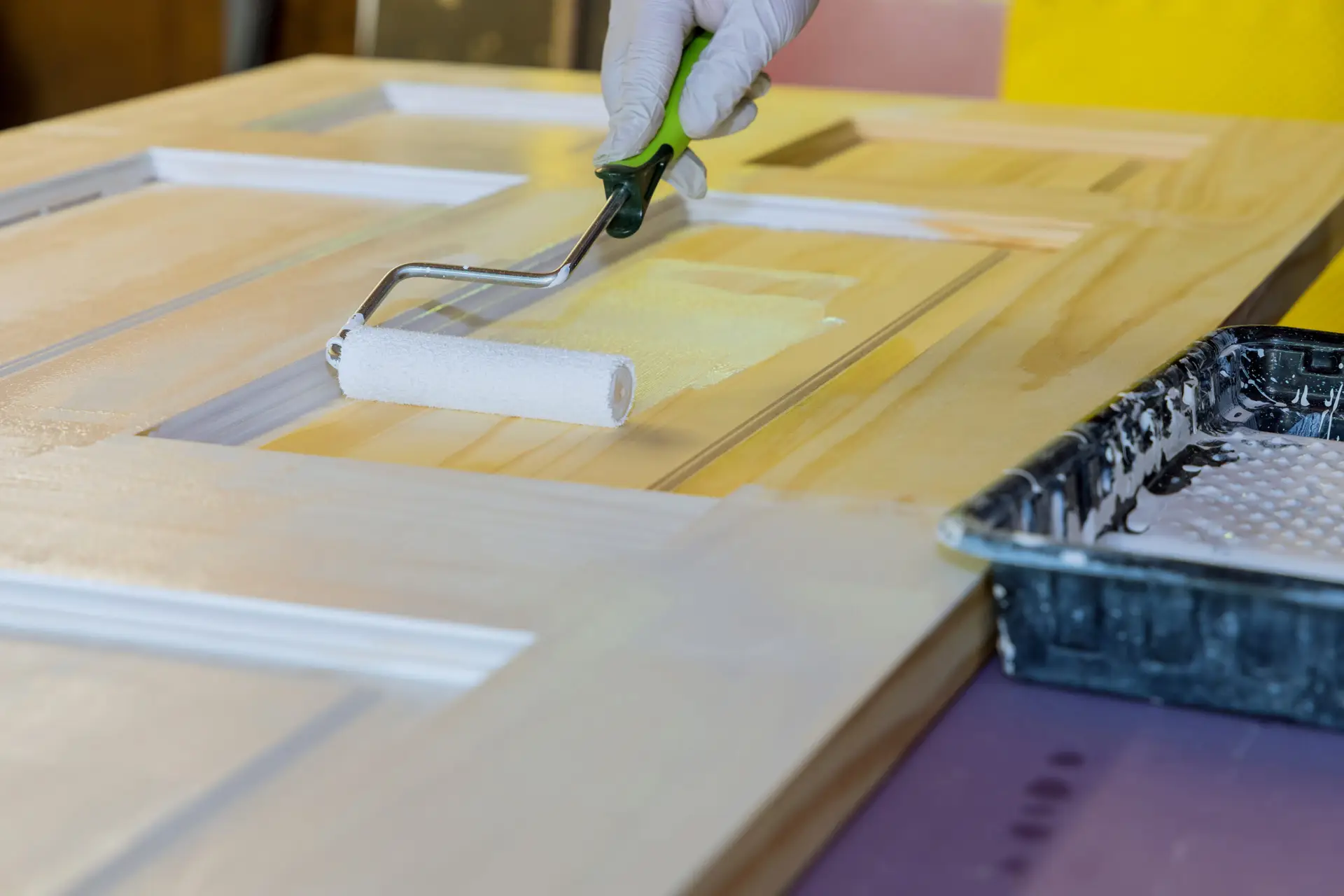
Choosing the right paint for your interior doors is essential because doors are high-touch, high-traffic architectural features. Unlike walls, which are mostly static, doors endure regular handling, moisture exposure (especially near bathrooms), and continuous mechanical stress.
What Interior Doors Need from Paint
The paint chosen for a door must be durable and practical, offering performance characteristics that exceed those of standard wall paint.
Durability Against Scuffs and Fingerprints
Doors—especially around handles, edges, and the lower sections—are constantly bumped, kicked, and touched. They require a paint film that is hard, resilient, and resistant to scuff marks and chips.
Cleanability in High-Traffic Areas
Since doors are frequently handled, they are prone to collecting dirt, dust, and fingerprints (especially if they are a light color). The paint surface must be non-porous and washable, allowing it to be scrubbed clean without wearing away the finish or creating noticeable shiny spots (burnishing).
Smooth, Professional-Looking Finish
Doors, particularly those with panels, are architectural elements. The paint should self-level well, minimizing brush or roller marks to achieve a smooth, professional-grade factory finish that highlights the door’s structure.
Best Paint Finishes for Interior Doors
Finish (or sheen) is one of the most critical choices, as it directly impacts durability and cleanability. For doors, low sheens (like flat or matte) are generally avoided.
| Finish | Sheen Level | Durability & Cleanability | Aesthetic Look |
| Satin | Moderate to low-gloss | Very good durability; easy to wipe clean. | Soft, velvety sheen; provides a modern, sophisticated look. |
| Semi-Gloss | High-gloss | Excellent durability; withstands frequent scrubbing without burnishing. | Classic, noticeable sheen; reflects light well and highlights millwork. |
| Gloss | Maximum gloss | Maximum durability and waterproofing; highly washable. | Very high shine; dramatic look, often used for accent doors or contemporary trim. |
Satin: Balanced Durability and Soft Sheen
Satin is an excellent choice if you want more durability than an eggshell, but dislike the high reflection of semi-gloss. It offers a great balance: a hard-wearing surface that is easy to wipe clean without looking overly shiny.
Semi-Gloss: Classic, Hardwearing Door Finish
Semi-gloss is the traditional standard for interior doors and trim in US homes. Its high binder content makes the cured film exceptionally hard and resistant to stains and moisture. The slightly reflective quality is classic and enduring, and it is the best finish for long-term cleanability.
Gloss: Bold Look and Maximum Wipeability
Full gloss delivers the highest level of durability and maximum light reflectivity. Be aware that because of the high reflection, gloss finish will highlight every tiny imperfection, scuff, and brush stroke on the door surface. It should only be used on doors that have been flawlessly prepped.
Recommended Paint Types
The composition of the paint determines how well it adheres, cures, and resists physical damage.
Acrylic Enamel for Most Interiors
Acrylic Latex Enamel is the standard recommendation for modern interior doors.
- Benefits: It is water-based, meaning easy cleanup, low odor, and fast drying time (allowing for second coats quickly). The “enamel” designation means it is formulated with additional resins that allow it to cure to a much harder, more durable finish than standard wall paint.
- Cure Time: While dry to the touch quickly, these paints take up to 30 days to fully cure and reach maximum hardness.
Oil-Based Paints (Where Still Allowed)
Historically, oil-based (alkyd) paint was the preferred choice for doors and trim due to its superior durability and legendary self-leveling capabilities (meaning virtually no brush marks).
- Considerations: Due to VOC restrictions, oil-based paints are being phased out or are simply unavailable in many areas. They require mineral spirits for cleanup and have a strong, lingering odor, making them challenging to use indoors.
Hybrid and Urethane-Reinforced Formulas
Modern chemistry has led to water-based alkyd hybrids (or urethane-modified acrylics).
- The Best of Both Worlds: These specialized paints combine the excellent self-leveling and hardness of traditional oil paint with the easy cleanup and lower odor of water-based formulas. They are often marketed as “cabinet and trim” or “door and trim” paints and are considered the premium choice for a flawless, durable finish.
Primers and Prep for Interior Doors
Proper surface preparation is the secret to a professional, long-lasting door finish, regardless of the paint type you choose.
When You Must Use Primer
Primer serves two critical functions: promoting adhesion and blocking stains. You must use a dedicated primer when:
- Painting Bare Wood: Primer seals the porous wood and prevents the topcoat from soaking in unevenly.
- Drastic Color Change: A high-hiding primer (often tinted gray) helps cover a dark color with a light one in fewer coats.
- Stains or Bleed-Through: Shellac-based or specialized stain-blocking primers are required to lock in wood tannins or previous marks (e.g., marker, grease) that could bleed through the topcoat.
- Painting over Glossy Finishes: A bonding primer is necessary for slick surfaces that have not been adequately sanded.
Sanding and Cleaning for Better Adhesion
Before any coat of paint or primer, always:
- Clean: Wash the door thoroughly with a degreaser (like TSP substitute or a mild dish soap solution) to remove all dirt, oil, and grime.
- Scuff Sand: Lightly sand the entire door surface with a fine-grit sandpaper (180 to 220 grit). This dulls the existing finish and creates a “tooth” for the new paint to grip onto, which is the single most important step for long-term adhesion.
FAQs About Interior Door Paint
“Can I use wall paint on doors?”
While you can use wall paint (typically a standard latex flat or eggshell) on doors, it is not recommended for the long term. Wall paint lacks the high concentration of binders and resins found in acrylic enamels, meaning it will scuff, stain, and chip much faster on a high-touch surface like a door.
“Which finish hides imperfections best?”
The lower the sheen, the better it hides imperfections. Satin is the best practical compromise: it has a low-enough sheen to minimize the appearance of minor dents and defects, while still being durable and washable. Semi-gloss and gloss finishes reflect light, highlighting every flaw.
“How many coats do doors usually need?”
Assuming you are using a quality primer and acrylic enamel paint:
- Minimum: Two coats of topcoat are almost always required to achieve deep color, adequate film thickness, and maximum durability.
- Best Results: Three thin coats will yield the most professional, durable, and brush-mark-free finish.
Planning your next home project? The longevity of your doors and trim starts with professional prep and the highest-quality paints.
Deluxe General Services provides expert painting services, ensuring your interior doors receive a flawless, durable, and long-lasting enamel finish. Contact us today for a consultation and quote!