

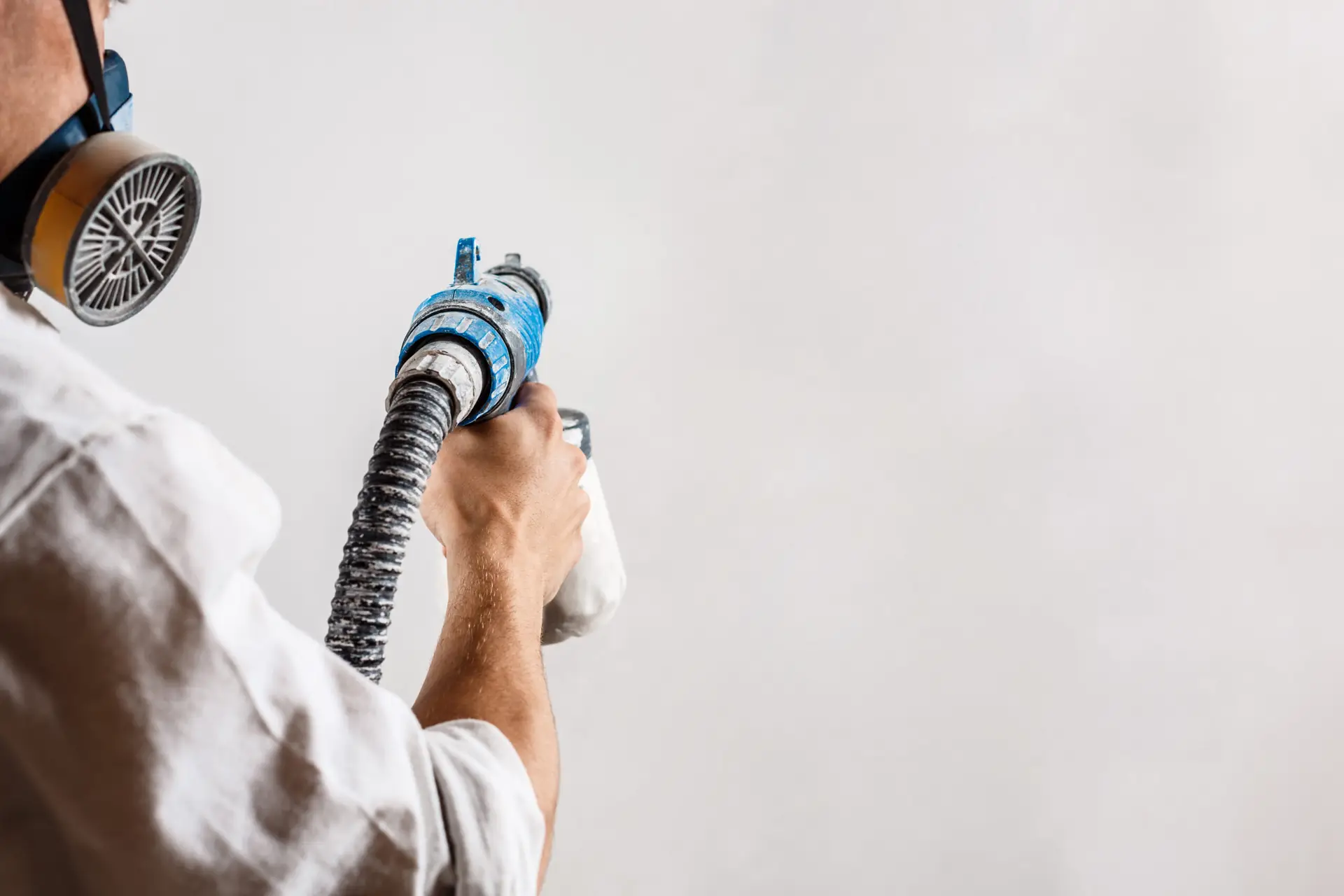
For large-scale home renovation or whole-house painting, moving beyond the traditional roller and brush can save significant time while delivering a flawless, smooth finish. Choosing the right paint sprayer is essential for success in an indoor environment.
Why Consider a Paint Sprayer for Interior Walls?
While brushes and rollers are effective for small touch-ups and cutting in, a paint sprayer offers distinct advantages, particularly on large or textured surfaces.
Faster Application, Smoother Finish vs. Roller/Brush
- Speed: A sprayer can cover an entire wall or ceiling in a fraction of the time required by rolling. This is especially true for second coats.
- Finish Quality: Spraying atomizes the paint, laying down a perfectly even, consistent coat that results in a factory-smooth finish, eliminating roller marks and brush strokes. This is highly desirable on smooth, modern walls.
- Textured Surfaces: For textured walls (like popcorn or stucco), spraying ensures the paint reaches every crevice uniformly, avoiding the heavy, uneven buildup that rollers often leave.
Large Surface Advantage (Walls/Ceilings)
Sprayers excel on large, continuous surfaces like vaulted ceilings and open-concept walls. However, the speed advantage is often offset by the time required for masking and preparation—a critical step that is far more demanding in interiors than exteriors.
Key Features to Look for in a Quality Sprayer
The main types of sprayers are designed for different jobs, and choosing the right one depends on your usage frequency (homeowner vs. professional) and the project size (walls vs. trim).
Type: Airless vs. HVLP vs. Handheld
| Sprayer Type | Best For | Pros | Cons |
| Airless | Large walls, ceilings, whole-house projects. | Extremely fast application; handles unthinned latex and heavy primers easily; powerful. | High overspray requires extensive masking; higher initial cost; difficult cleanup. |
| HVLP (High Volume Low Pressure) | Trim, doors, cabinets, fine furniture. | Minimal overspray; provides a professional, mirror-like finish; great control. | Very slow for large walls; requires paint thinning; lower flow rate. |
| Handheld Airless | Small rooms, closets, trim, minor touch-ups. | Highly portable; quick setup; good for small batch jobs. | Limited capacity (small cup); lower pressure/power than cart-based units. |
Flow Rate, Tip Size, Adjustability, Ease of Cleaning
- Flow Rate (GPM – Gallons Per Minute): Higher flow rate means faster application. For large interior walls, look for a unit capable of at least 0.24 GPM or higher. Higher rates are necessary for handling thicker, high-quality latex paint.
- Tip Size: The tip determines the size of the fan pattern and the flow volume. Interior walls typically use tips in the 515 to 517 range (the first number is the fan width (5 inches at 12 inches away), and the last two are the orifice size).
- Adjustability: Look for adjustable pressure settings (especially on Airless models). Lower pressure reduces overspray, which is vital when spraying near ceilings or corners in an interior space.
- Ease of Cleaning: This is crucial. Airless sprayers must be thoroughly flushed with water or solvent immediately after use. Models with reversible tips and easy access to filters simplify this necessary process.
Portability and Homeowner vs. Pro Use
- Homeowner/DIY: Cart-based Airless models (like the Project Painter series) or higher-end HVLP systems. These balance performance and price.
- Professional/Heavy Duty: High-horsepower (1 HP+) Airless units (3000 PSI+) with features like long hoses and large capacity pumps, designed for daily use and thick coatings.
Top Recommended Models
Based on common US market offerings, here is a classification of the models requested, focusing on their use case for interior painting:
| Model Description | Classification | Intended Use for Interiors | Ideal User |
| Magnum Project Painter Plus TrueAirless Sprayer | Airless (DIY/Mid-Range) | Whole rooms, ceilings, large continuous walls. | Serious DIYer, occasional contractor. |
| Indoor Outdoor Airless Sprayer for House Painting | Airless (General Use) | Versatile, good for latex on walls and general home repainting. | Homeowner looking for maximum speed. |
| Backpack Handheld Latex Paint Sprayer Wall Repair Machine | Handheld Airless | Closets, accent walls, touch-ups, and small batch jobs. | Convenient DIYer, apartment/condo owner. |
| Wagner HVLP Pistola de Pintura Elétrico 350W W670 | HVLP (Turbine) | Fine finish on interior trim, doors, cabinets, and built-ins. | Hobbyist, trim carpenter, furniture restorer. |
| Bosch PFS 2000 Paint Sprayer | HVLP/Handheld (Entry-Level) | Light duty, small projects, and thin coatings; not ideal for heavy latex on walls. | Budget-conscious DIYer, occasional user. |
| Airless Paint Machine 1.35HP 3000 PSI FG6003T127 | Airless (Professional Grade) | High-volume production painting, thick commercial coatings, daily use. | Professional painting contractor. |
The Consensus Pick for Interior Walls: The Magnum Project Painter Plus (or similar mid-range Airless sprayer) offers the best combination of speed, power to handle latex paint, and features suitable for the advanced DIY homeowner tackling large walls and ceilings.
How to Use a Paint Sprayer on Interior Walls & Ceilings
While spraying is quick, the preparation work is extensive, but mandatory for a clean result.
Prep: Masking, Remove Furniture, Protect Floors/Trims
Interior preparation is 90% of the job. Overspray is unavoidable with Airless units.
- Remove Everything: Clear the room of all furniture, wall hangings, and light fixtures.
- Mask Floors and Windows: Use heavy drop cloths on floors. Mask off all windows completely using plastic sheeting (0.7 mil minimum).
- Critical Masking: Use painter’s tape and plastic sheeting to completely cover all trim, baseboards, doors, cabinets, outlets, switches, and fireplace mantels. Extend the sheeting several feet out from the wall/ceiling intersection to catch overspray.
- Ventilation: Open windows and use fans to ensure air movement, wearing a high-quality respirator mask (rated for organic vapors) is non-negotiable.
Technique: Hold Tip 12-18″ Away, Overlap Passes ~50%
- Distance: Hold the spray tip perpendicular to the surface, maintaining a consistent distance of 12 to 18 inches (30-45 cm). Moving closer causes thick, runny coats; moving farther increases overspray.
- Movement: Use your entire arm to move the gun, not just your wrist. The movement must be parallel to the wall to keep the spray pattern consistent.
- Overlap: Overlap each pass by approximately 50%. The center of your new pass should align with the bottom edge of the previous pass. This ensures full coverage and prevents “striping.”
- Triggering: Practice turning the spray fan on after your arm starts moving and releasing the trigger before your arm stops moving. This prevents heavy edges and drips at the beginning and end of each pass.
Cleaning & Maintenance of the Sprayer After Use
Proper cleaning immediately after use is the most important maintenance step for sprayer longevity.
- Flush Immediately: Never let latex paint dry inside the machine. Flush the system immediately after use.
- Water-Based Paint: Run clean water through the sprayer until the water coming out of the tip is completely clear. Repeat with a second bucket of clean water.
- Tip Maintenance: Remove the spray tip and guard, clean them thoroughly with water and a brush, and store the tip submerged in water or manufacturer’s solution to prevent the tiny orifice from clogging.
- Storage: For long-term storage, run pump preserver fluid or a storage fluid (recommended by the manufacturer) through the pump to lubricate seals and prevent corrosion.
FAQs about Paint Sprayers
“Which sprayer is best for walls vs. trim?”
- Walls & Ceilings (High-Volume): Airless is the undisputed champion for speed and handling heavy wall latex.
- Trim & Doors (Fine Finish): HVLP (High Volume Low Pressure) is the superior choice. Its lower pressure means far less overspray risk on expensive trim and doors, and it delivers the smoother finish required for these high-touch, detail surfaces.
“Do I need to thin paint for the sprayer?”
- Airless Sprayer: Generally, no. Modern Airless sprayers are powerful enough to handle unthinned, high-quality latex paint straight from the can. Always check the manufacturer’s instructions for the specific unit and paint.
- HVLP Sprayer: Usually, yes. HVLP uses a smaller orifice and less pressure, meaning the paint must be thinned (often by 10-20% with water for latex) to achieve proper atomization. Use a viscosity cup to measure the thinning precisely.
“What’s the cleanup required after spraying?”
Cleanup is extensive and mandatory. It involves:
- Flushing gallons of clean water through the pump and hose system (until the water runs clear).
- Thoroughly scrubbing the tip, guard, and filter screens.
- Cleaning the exterior of the gun body.
- For long-term storage, introducing a preservative fluid.
A thorough cleanup for an Airless unit typically takes 30–60 minutes and is essential to prevent internal component damage.
Ready to achieve a flawless, smooth-as-glass finish on your interior walls without the hassle of buying, maintaining, and cleaning expensive equipment?
Contact Deluxe General Services today. Our professional crews use commercial-grade Airless and HVLP equipment to deliver high-quality, long-lasting interior painting results, minimizing overspray and maximizing efficiency.