

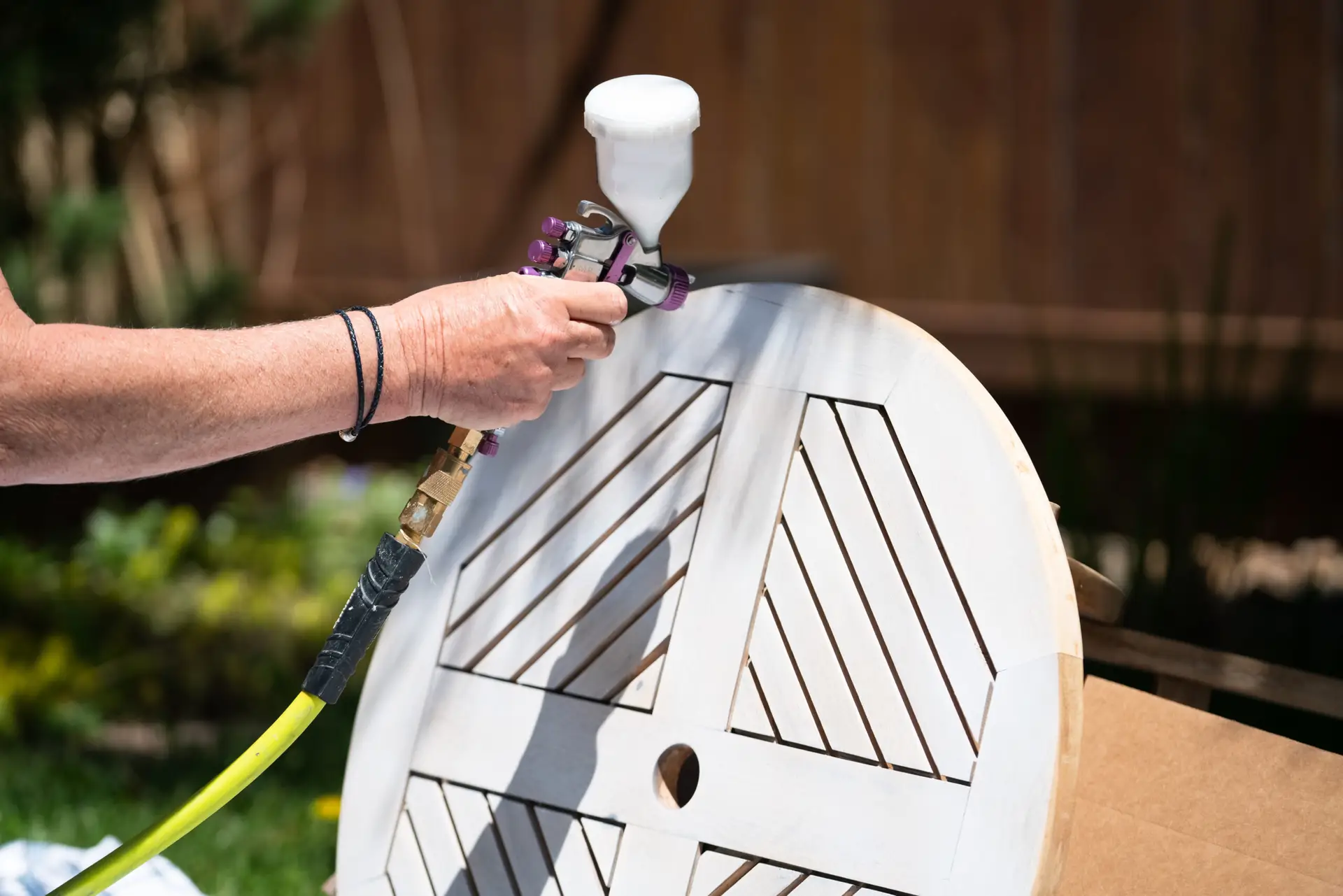
Spray painting is one of the fastest and most efficient ways to achieve a smooth, professional-looking finish on wood projects, from small crafts and furniture to large outdoor structures. It eliminates the brush marks common with traditional painting and provides excellent coverage, provided the wood is properly prepared.
Short Answer: Yes, Wood Can Be Spray Painted
Spray paint is an excellent choice for wood surfaces, offering speed and a near-factory finish if applied correctly.
Why Spray Paint Works Well on Wood Surfaces
The primary benefit of spray paint on wood is the fine, atomized mist it creates. When applied in thin, even coats:
- Smooth Finish: It easily self-levels, minimizing texture imperfections and avoiding the unsightly lines that a paintbrush can leave behind. This is particularly valuable for complex surfaces like spindle legs, wicker, or detailed trim.
- Speed and Efficiency: Drying times between coats are usually much faster than with brush-applied paints, allowing a multi-coat project to be finished in a single afternoon.
- Even Coverage: The spray reaches all angles and crevices quickly and uniformly, ensuring full coverage, especially on uneven or carved wood.
Differences Between Raw, Stained, and Painted Wood
The wood’s current state dictates the preparation steps required:
| Wood Condition | Preparation Focus | Key Requirement |
| Raw/Unfinished Wood | Sealing porous grains and preventing moisture absorption. | Always requires primer. The wood is highly porous and will absorb the paint unevenly otherwise. |
| Stained Wood | Ensuring the current stain or sealer is fully cured and clean. | If the stain is oil-based, a shellac or oil-based primer is needed to prevent bleed-through. |
| Previously Painted Wood | Creating a uniform, dull surface for new paint adhesion. | Light sanding (scuffing) and repairing any chips or flaking areas. |
Preparing Wood for Spray Paint
Proper preparation determines 90% of the final result. Skipping these steps will lead to poor adhesion, uneven color, or flaking paint down the road.
Cleaning and Removing Grease or Residue
Before sanding, the surface must be clean.
- Use a degreaser or a mild soap and water solution (like dish soap) to clean the wood, removing any dust, dirt, grease, or sticky residues.
- For old, grime-coated furniture, a wood-safe cleaner like Trisodium Phosphate (TSP) substitute can be effective.
- Allow the wood to dry completely before proceeding to the next step.
Sanding for Smoothness and Adhesion
Sanding provides the necessary “tooth” (texture) for the spray paint to grip the surface.
- Bare/Raw Wood: Start with medium-grit sandpaper (around 100-120 grit) to smooth out rough spots, and finish with a fine-grit (220-300 grit) to achieve a smooth finish. Always sand with the direction of the wood grain.
- Previously Painted/Sealed Wood: Use a fine-grit sandpaper (220 grit or finer) to scuff the surface. The goal is not to remove the old finish, but to simply dull the gloss, ensuring the new paint adheres securely.
- After sanding, thoroughly wipe the wood down with a tack cloth or a rag lightly dampened with mineral spirits to remove all sanding dust.
When and Why Primer Is Required
Primer is not optional for most wood spray painting projects; it is a critical intermediary layer.
- Sealing: Primer seals the wood’s pores, preventing the paint from soaking in unevenly (which causes a dull, patchy finish).
- Blocking Bleed-Through: Primer creates a barrier that prevents tannins (natural wood oils) or old stain colors from bleeding through and discoloring the new topcoat.
- Adhesion: Primer is formulated to adhere strongly to both the wood/old finish and the new topcoat, significantly improving paint longevity and durability.
Rule of Thumb: Always use a high-quality primer on raw wood, and strongly consider using one when painting over dark stains, oil-based paint, or wood species like oak, pine, or cedar.
Best Spray Paint Types for Wood
Choosing the right paint ensures the finish matches the expected durability and location.
General-Purpose Spray Paint (Acrylic Enamel)
This is the most common and versatile choice for wood projects.
- Use Case: Crafts, decor, indoor furniture, or items needing a quick, easy update.
- Pros: Fast-drying, excellent color variety, and generally easy to work with.
- Cons: Not the most durable for high-wear areas or extreme outdoor conditions.
Enamel Spray Paint for Durability
Look for labels specifically mentioning “Enamel” or “Hard Coat” finishes.
- Use Case: Cabinets, tabletops, chairs, and anything that sees frequent use, as it cures to a hard, chip-resistant shell.
- Pros: Highly durable, moisture-resistant, and offers excellent protection against wear.
- Cons: Takes longer to fully cure (can take days to reach full hardness) and requires excellent surface prep.
Interior vs. Exterior Spray Paint
The paint’s formulation must match the environment.
- Exterior: These paints contain additives that resist UV rays (preventing fading) and are flexible enough to handle temperature and humidity changes without cracking or peeling. Look for labels like “Outdoor” or “Marine Grade.”
- Interior: Formulated for low odor and general wear, they do not require the same level of UV resistance as exterior paints.
Application Tips for Professional Results
Achieving that smooth, factory-like finish comes down to technique.
Light, Even Coats and Correct Spray Distance
- Distance: Hold the can 10 to 12 inches away from the surface. Too close, and the paint will pool and run; too far, and the paint will dry before it lands (resulting in a rough, dusty texture).
- Movement: Use smooth, back-and-forth strokes, always keeping the can in motion. Do not stop spraying while aiming at the wood. Start the spray off the edge of the object and stop it off the other edge.
- Coats: Always apply multiple thin coats rather than one heavy coat. A light coat should be just enough to cover the primer or previous color, allowing some of the underneath layer to still show through slightly.
Dry Time Between Coats
Consult the can’s instructions, but most spray paints require a dry time of 15 minutes to 1 hour between coats.
- The “Tack Test”: The paint is ready for the next coat when it is tacky but no longer wet. If it feels wet or your finger leaves a smudge, wait longer.
- Sanding Between Coats: For the absolute smoothest finish, lightly sand (de-nib) the surface between coats (after the paint is fully dry, usually 4+ hours) using 400-grit or higher sandpaper or steel wool to knock down any tiny imperfections or dust, then wipe clean before the final coat.
Avoiding Runs, Orange Peel, and Uneven Coverage
- Runs (Drips): Caused by holding the can too close or moving too slowly. If a run occurs, let the paint dry completely, then sand the run flat before applying the next coat.
- Orange Peel (Rough Texture): Caused by spraying too far away, causing the paint to partially dry mid-air. Move the can slightly closer (but keep the spray moving) to solve this.
- Uneven Coverage: Ensure your spray passes overlap by about 50% on each pass to maintain a consistent finish.
FAQs
Does spray paint last on wood?
Yes, spray paint can last for many years on wood, especially exterior-grade enamel or acrylic formulations. Longevity is entirely dependent on preparation and application. A surface that was properly cleaned, sanded, and primed will hold the spray paint much longer than an unprepared surface, where the paint may start to chip or peel within months.
Can I spray paint unfinished wood without primer?
While you can, you should not. Spraying unfinished wood without primer will result in a poor, amateur finish. The wood will unevenly absorb the solvent and pigment, leading to blotchy, dull patches. The paint will also lack proper adhesion and will be prone to scratching and flaking very easily. Always prime raw wood for durability.
Is spray paint better than brush painting on wood?
Neither method is universally “better”; they serve different purposes:
| Feature | Spray Painting | Brush Painting |
| Finish Quality | Excellent (smooth, no streaks) | Good (can leave brush marks) |
| Speed | Very fast application and dry time | Slower application, longer dry time |
| Durability | High, especially with enamel types | Very High (thicker film build) |
| Control | Low (over-spray is a major issue) | High (precise edges and detail) |
For speed and a flawless, streak-free modern finish, spray paint is superior. For maximum film thickness and control on trim or tight spaces, traditional brush painting is often preferred.
Achieve the flawless finish your project deserves by mastering these steps!
Head to your local home improvement store to grab your primer and a few cans of high-quality enamel spray paint to get started on your furniture or decor piece today!