

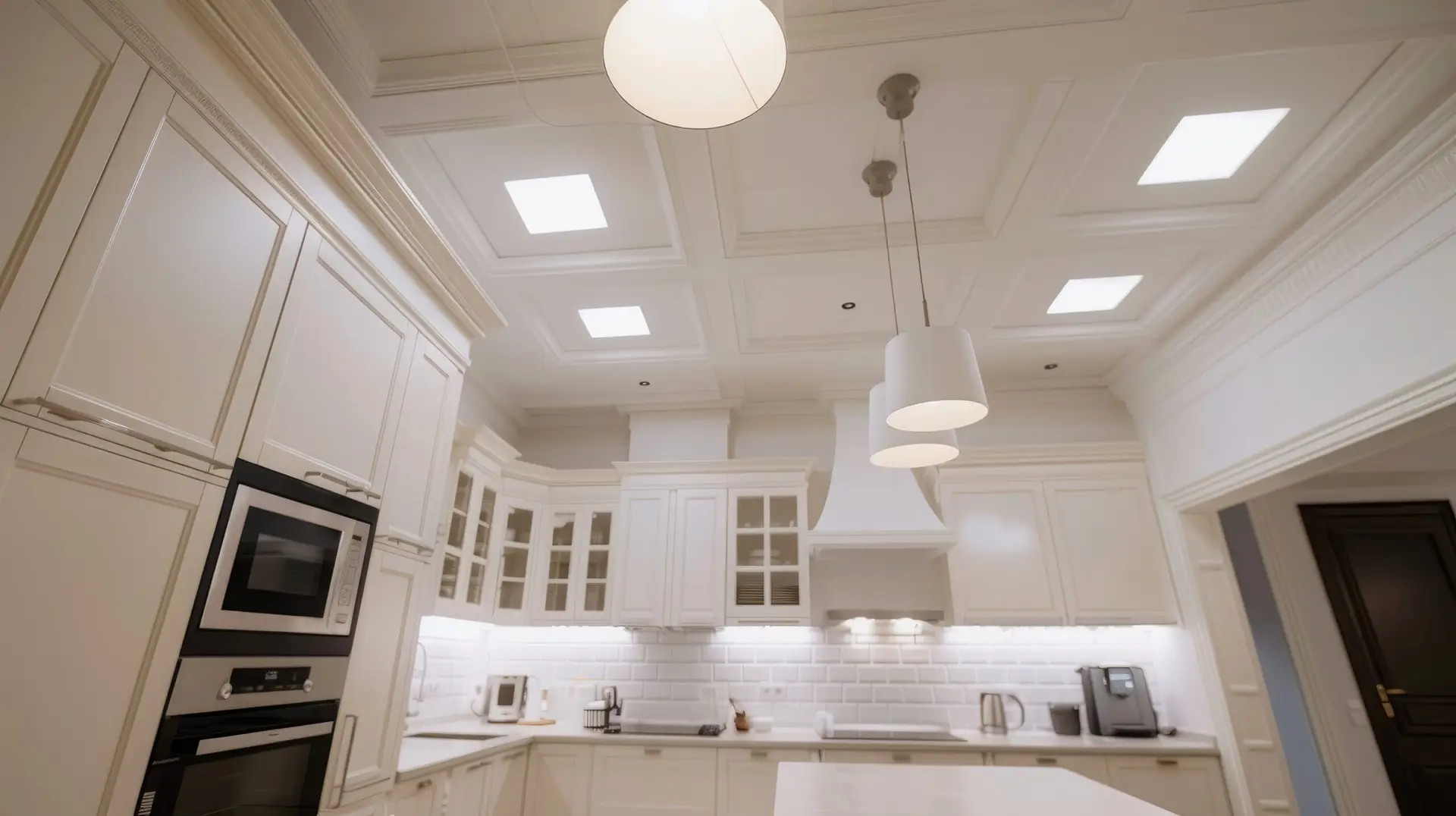
The kitchen ceiling, often overlooked, is arguably one of the most critical surfaces to paint with the right product. Unlike ceilings in other rooms, it’s constantly exposed to steam, cooking fumes, grease splatters, and humidity. Choosing the wrong paint can lead to rapid deterioration, unsightly stains, peeling, and even mildew growth, diminishing your kitchen’s appearance and hygiene. Delux General Services guides you through selecting the best paint for your kitchen ceiling, ensuring a durable, washable, and long-lasting finish that withstands the unique challenges of this busy space.
Why ceiling paint matters in kitchens
The specific environment of a kitchen demands a specialized approach to ceiling paint, far beyond what’s acceptable in a living room or bedroom.
- Humidity and Moisture: Cooking, boiling water, and dishwashing generate significant steam and humidity. Standard ceiling paints, typically flat and porous, absorb this moisture, leading to:
- Peeling and Blistering: The absorbed moisture can cause the paint film to lose adhesion to the substrate.
- Mold and Mildew Growth: Damp, warm environments are perfect breeding grounds for fungi, resulting in unsightly black spots and an unhealthy indoor environment.
- Grease and Fumes: Cooking releases airborne grease particles and food odors. These cling to surfaces, including the ceiling.
- Staining and Discoloration: Grease buildup can cause yellowing or brown stains that are difficult or impossible to remove from standard paints.
- Odor Absorption: Porous paints can absorb cooking odors, making the kitchen smell stale even after cleaning.
- Washability and Durability: Due to grease and moisture, kitchen ceilings need to be cleaned periodically. Standard flat ceiling paints are not designed for scrubbing and will often rub off or streak when wiped. A durable paint will withstand repeated cleaning without damage.
- Light Reflection: A well-painted, clean ceiling can reflect light, making the kitchen appear brighter and more spacious. A stained or dull ceiling will absorb light and make the space feel smaller and darker.
- Hygiene: In a food preparation area, preventing mold, mildew, and easily cleanable surfaces contribute significantly to overall hygiene.
Top recommended paint types
For kitchen ceilings, specific paint formulations are designed to combat humidity, grease, and wear.
- Acrílica Premium (Lavável/Acetinada):
- Characteristics: These are water-based paints known for their excellent washability and durability. They offer good resistance to moisture and can be formulated with mildewcides.
- Why it’s good for kitchens: They create a film that is resistant to staining and can be easily wiped clean without damaging the surface. They breathe well, reducing moisture buildup within the paint film.
- Considerations: Look for “Super Lavável,” “Toque de Seda,” or “Acetinada” on the label. While generally very good, for extremely high-humidity kitchens or commercial settings, other options might be preferred.
- Epóxi Base Água:
- Characteristics: A two-part (or sometimes single-part) paint that cures to a very hard, durable, and chemical-resistant finish. The water-based version has lower odor and easier cleanup than traditional solvent-based epoxy.
- Why it’s good for kitchens: Provides exceptional resistance to moisture, mold, mildew, and grease. It forms a non-porous, tile-like surface that is incredibly easy to clean and sanitize. Excellent for high-traffic, high-humidity, or even commercial-style kitchens.
- Considerations: More expensive and generally harder to apply than acrylics (requires mixing, has a pot life, dries quickly). The finish is usually semi-gloss or gloss, which highlights imperfections. Not ideal for ceilings with many irregularities.
- Esmalte Sintético Base Água (Esmalte Acrílico):
- Characteristics: Similar to acrylic paint but formulated to behave more like a traditional enamel, providing a harder, smoother, and more durable finish than standard acrylic. Often considered a good bridge between standard acrylics and epoxies.
- Why it’s good for kitchens: Offers excellent washability, good resistance to grease and moisture, and typically has good mildew resistance. It’s often available in semi-gloss or gloss.
- Considerations: Still requires good preparation. Can have slightly more odor than a typical acrylic latex, but far less than solvent-based enamels.
Specialized “Ceiling Paints” (Standard White, Flat Finish):
- Avoid these for kitchens. While they are great for general ceilings due to their flat finish (which hides imperfections) and non-drip properties, they are porous, not washable, and will not stand up to the unique demands of a kitchen. They will absorb grease and moisture, leading to rapid degradation and staining.
Paint finishes for humid environments
The sheen, or finish, of the paint plays a significant role in its durability and washability, especially in high-humidity areas like kitchens and bathrooms.
- Semi-Gloss:
- Pros: Highly durable, very washable, excellent resistance to moisture and mildew. Reflects light well, making the space brighter.
- Cons: Its reflectivity means it highlights surface imperfections (e.g., uneven drywall, old repairs). Requires a very smooth surface.
- Recommendation: Highly recommended for kitchen ceilings where durability and washability are paramount, and the ceiling is relatively smooth.
- Gloss:
- Pros: The most durable and washable finish, with superior resistance to moisture and chemicals. Creates a very bright, reflective surface.
- Cons: Reflects virtually all imperfections. Can look overly shiny in a residential setting.
- Recommendation: Best for very modern kitchens with perfectly smooth ceilings, or in commercial kitchens where ultimate durability and hygiene are the priority.
- Satin (Acetinado) or Eggshell (Casca de Ovo):
- Pros: Offers a softer sheen than semi-gloss, helping to hide minor imperfections better, while still providing good washability and moisture resistance compared to flat paints.
- Cons: Not as durable or easy to clean as semi-gloss or gloss in very high-grease areas.
- Recommendation: A good compromise if you want some washability but are concerned about imperfections showing on a semi-gloss ceiling. Ensure it’s a high-quality “lavável” (washable) acrylic.
- Flat (Fosco) or Matte:
- Pros: Hides ceiling imperfections extremely well. Minimal light reflection.
- Cons: Not recommended for kitchen ceilings. Highly porous, not washable, absorbs moisture and grease, and prone to mildew. Will quickly look dirty and stained.
Delux General Services Recommendation for Kitchen Ceilings: For most residential kitchens, a premium washable acrylic with a satin or semi-gloss finish is the best balance of durability, washability, and aesthetic appeal. If your kitchen is extremely active, prone to heavy grease, or you prioritize ultimate durability and ease of cleaning above all else, a water-based epoxy is an excellent, albeit more challenging, choice.
Tips for smooth application
Even the best paint won’t look good without proper application.
- Prepare the Surface Meticulously:
- Clean and Degrease: This is the most critical step. Kitchen ceilings accumulate grease. Wash the entire ceiling thoroughly with a strong degreaser (like TSP substitute or a dedicated kitchen degreaser). Rinse completely multiple times to remove all residue. Allow to dry completely. Any residual grease will prevent paint adhesion.
- Repair Imperfections: Fill any cracks or holes with drywall compound and sand smooth.
- Mildew Treatment: If there’s existing mildew, treat it with a bleach and water solution (1 part bleach to 3 parts water), let it sit for 15-20 minutes, then rinse thoroughly and allow to dry.
- Masking: Use high-quality painter’s tape to protect walls and light fixtures. Cover countertops and floors with drop cloths.
- Use a Stain-Blocking Primer:
- Even if your chosen paint is self-priming, a dedicated stain-blocking primer (especially an oil-based one like a shellac-based primer or a high-quality acrylic stain-blocker) is highly recommended for kitchen ceilings. It will lock in any lingering grease, water stains, or odors and ensure consistent color.
- Apply one thin, even coat. Allow to dry completely.
- Choose the Right Tools:
- Roller: Use a high-quality roller with a medium nap (e.g., 1/2 inch) for textured ceilings, or a short nap (3/8 inch) for smooth ceilings.
- Brush: An angled sash brush (2.5-3 inches) for cutting in edges and corners.
- Extension Pole: Essential for reaching the ceiling without strain.
- Application Technique:
- Cut In First: Use your brush to paint a strip around the perimeter of the ceiling where it meets the walls and around any light fixtures.
- Roll in Sections: Work in small sections (e.g., 1.5m x 1.5m or 5ft x 5ft).
- “W” or “M” Pattern: Apply paint in a “W” or “M” pattern, then fill in the pattern without lifting the roller.
- Maintain a Wet Edge: Always roll into a previously painted, still-wet area to avoid lap marks.
- Apply Two Thin Coats: Two thin, even coats are always better than one thick coat for durability and finish. Allow the first coat to dry completely according to manufacturer instructions before applying the second.
- Ensure Good Ventilation: Open windows and doors (if weather permits) to allow fumes to dissipate and aid drying, especially in a kitchen. Use fans if necessary.
- Patience with Drying and Curing:
- While the ceiling may feel dry to the touch in a few hours, avoid washing it or subjecting it to high humidity for at least 7-14 days to allow the paint to fully cure and achieve its maximum durability. Refer to the paint can’s full cure time.
By following these guidelines, your kitchen ceiling will not only look pristine but will also withstand the daily rigors of cooking, remaining fresh and clean for years to come.
Is your kitchen ceiling showing signs of grease, stains, or mildew? Don’t settle for a dull or dirty overhead! Delux General Services specializes in painting kitchen ceilings with the right products and expert techniques, ensuring a durable, washable, and beautiful finish that truly lasts. Protect your kitchen’s hygiene and enhance its appeal. Contact us today for a free consultation and estimate!