

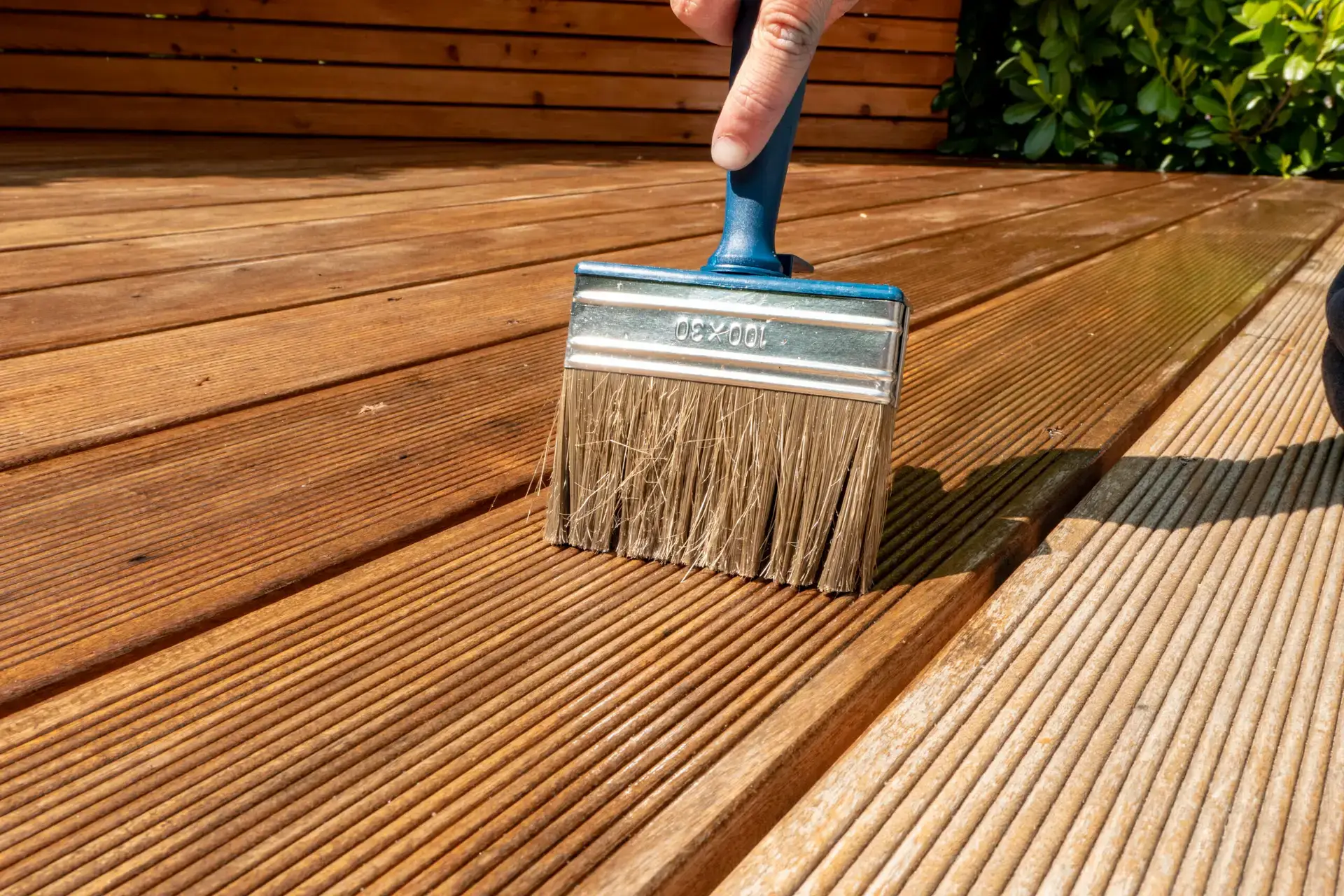
After investing time and effort into staining your deck, patience becomes the next crucial step. Knowing how long deck stains take to dry is vital not only for achieving a durable and beautiful finish but also for knowing when you can safely use your outdoor living space again. Rushing the process can lead to sticky surfaces, damaged finishes, and compromised protection. Delux General Services breaks down the factors influencing deck stain drying times, offers tips to potentially speed up the process, and advises on when your deck is truly ready for foot traffic and furniture.
Factors that affect drying time
The drying time of deck stain is not a fixed number; it’s a dynamic process influenced by several environmental and product-specific variables.
1. Temperature and humidity
These are arguably the most significant environmental factors.
- Temperature:
- Ideal Range: Most deck stain manufacturers recommend applying stain when temperatures are between 10°C (50°F) and 32°C (90°F).
- Warmer Temperatures (within range): Generally accelerate drying. The solvents (in oil-based stains) or water (in water-based stains) evaporate more quickly.
- Colder Temperatures (below range): Significantly slow down drying and curing. Below 10°C (50°F), some stains, especially water-based ones, may not cure properly at all, leading to a weak film and poor adhesion. Many manufacturers specify minimum overnight temperatures that must be maintained for several hours after application.
- Extremely Hot Temperatures (above range): While seeming to dry quickly, extreme heat can cause the stain to “flash dry” on the surface, meaning the top layer dries too fast, trapping solvents or moisture underneath. This can lead to bubbling, wrinkling, or a sticky finish, and ultimately compromise durability. Avoid staining in direct, intense sunlight during the hottest part of the day.
- Humidity:
- Ideal Range: Relative humidity levels between 40% and 70% are generally optimal for deck stain drying.
- High Humidity (above 70%): Slows down the evaporation of water or solvents from the stain. The air is already saturated with moisture, making it harder for the stain to release its own. This prolongs drying times and can leave the surface tacky for longer, making it susceptible to dirt and mildew.
- Low Humidity (below 40%): Can sometimes cause stains to dry too quickly, especially for water-based products, potentially leading to lap marks or poor penetration before the stain can fully soak in.
2. Type of stain used
Different stain formulations have inherent drying characteristics.
- Water-Based (Acrylic/Latex) Stains:
- To Touch Dry: Typically 1 to 4 hours.
- Ready for Recoat: Usually 2 to 6 hours.
- Light Foot Traffic: 24 to 48 hours.
- Full Cure: 7 to 30 days.
- Characteristics: Dry faster than oil-based stains due to water evaporation, but are more sensitive to high humidity and cold temperatures during application.
- Oil-Based (Alkyd) Stains:
- To Touch Dry: Typically 6 to 24 hours.
- Ready for Recoat: Usually 12 to 24 hours.
- Light Foot Traffic: 24 to 48 hours.
- Full Cure: 7 to 30 days (sometimes longer in very cool/humid conditions).
- Characteristics: Dry slower due to solvent evaporation, but often penetrate deeper and are more forgiving in slightly cooler (but still within range) temperatures. High humidity significantly extends their drying time.
- Transparency Level (Impact on Drying):
- Clear Sealers/Transparent Stains: Tend to dry faster as they have less pigment and a thinner film.
- Semi-Transparent/Semi-Solid/Solid Stains: Contain more solids and pigment, which generally leads to longer drying times for each coat, especially for full cure. Solid stains, being film-forming, can behave more like paint in terms of cure time.
- Number of Coats: Applying multiple coats will naturally extend the total project drying time, as each coat needs to dry before the next is applied, and the final cure time applies after the last coat.
- Film Thickness: Applying stains too thickly (over-application) will drastically increase drying and curing times and can lead to a tacky surface, bubbling, or peeling. Thin, even coats are always better.
Other factors:
- Wood Porosity/Type: Denser woods absorb less stain, potentially leading to longer surface drying times. Older, more porous wood might absorb stain faster.
- Ventilation/Airflow: Good air circulation (a gentle breeze) helps carry away evaporating solvents/water, speeding up drying.
- Surface Condition: A properly prepared, clean, and dry deck will allow the stain to penetrate and dry as intended.
- Direct Sunlight: While some warmth helps, intense direct sunlight can cause “flash drying” (surface dries too fast, trapping moisture), which is detrimental. Work in shade or on overcast days if possible.
Tips to speed up drying
While you shouldn’t try to drastically “force” the drying process, these tips can optimize conditions:
- Choose the Right Weather: This is the most effective tip. Stain on a day with moderate temperatures (15°C to 25°C / 60°F to 77°F), low to moderate humidity (below 70%), and good airflow. Check the forecast for several days to ensure no rain or drastic temperature drops.
- Apply Thin Coats: Always apply thin, even coats. Avoid puddling or over-application. This is the second most important tip.
- Ensure Proper Ventilation: If the deck is covered, or in an area with poor airflow, using fans (if enclosed) or allowing natural breezes to circulate can help.
- Clean and Prepare Thoroughly: A clean, dry, and properly prepared surface allows the stain to penetrate and adhere efficiently, promoting proper drying.
- Do Not Thin Stain (Unless Specified): Thinning a stain (unless explicitly recommended by the manufacturer for specific application methods like spraying) can compromise its formulation and drying characteristics.
- Avoid Excessive Humidity: If humidity is persistently high, postpone staining.
- Consider Water-Based Stains: If you need faster drying times due to a tight schedule or unpredictable weather, water-based stains generally dry much quicker than oil-based ones.
When to use the deck after staining
Patience during the curing phase is paramount to the stain’s long-term performance.
- “Dry to the Touch”:
- This is the initial drying stage where the surface feels dry and non-tacky.
- Timeframe: Usually 1-24 hours, depending on stain type and conditions.
- What it means: You can typically walk on the deck lightly (e.g., to apply a second coat) without marking it, but avoid shoes that might scuff.
- Ready for Light Foot Traffic:
- The stain has dried sufficiently to resist minor scuffs and marks.
- Timeframe: Generally 24-48 hours after the final coat.
- What it means: You can walk on the deck with regular shoes, but avoid heavy traffic, dragging items, or placing furniture.
- Ready for Furniture, Grills, and Heavy Use (Full Cure):
- This is when the stain has fully hardened and achieved its maximum durability, adhesion, and resistance to elements. Rushing this stage is a common cause of premature stain failure (peeling, scratching, stickiness).
- Timeframe: This is the longest phase, typically ranging from 7 days to 30 days or even more, depending on the stain type, number of coats, temperature, and humidity. Always refer to the specific manufacturer’s instructions on the product label.
- What it means: You can safely place furniture, grills, and other items back on the deck. The stain will be much more resistant to scratches, scuffs, and moisture.
- During Cure Time: Try to avoid spills, especially water, during the initial part of the cure, as they can still leave marks.
- Check the Forecast: Always monitor weather forecasts for both daytime highs and nighttime lows, as well as humidity levels, for at least 48-72 hours post-application.
- Choose Mid-Season: Spring and early autumn often offer the most stable conditions (moderate temperatures, lower humidity) for deck staining. Summer can be good, but avoid the hottest, most humid days.
- Allow Extra Time: In periods of higher humidity or cooler temperatures, be prepared to extend drying times beyond the manufacturer’s minimum recommendations.
By understanding these drying times and factors, you can properly plan your deck staining project, ensuring a beautiful, protective finish that will last for years of enjoyment.
Don’t let guesswork ruin your deck staining project! Understanding drying times is crucial for a flawless, long-lasting finish. Delux General Services offers expert deck staining services, taking the guesswork out of the process with meticulous preparation and application techniques. We ensure your deck is perfectly protected and ready for enjoyment when it should be. Contact us today for a free consultation and estimate!