

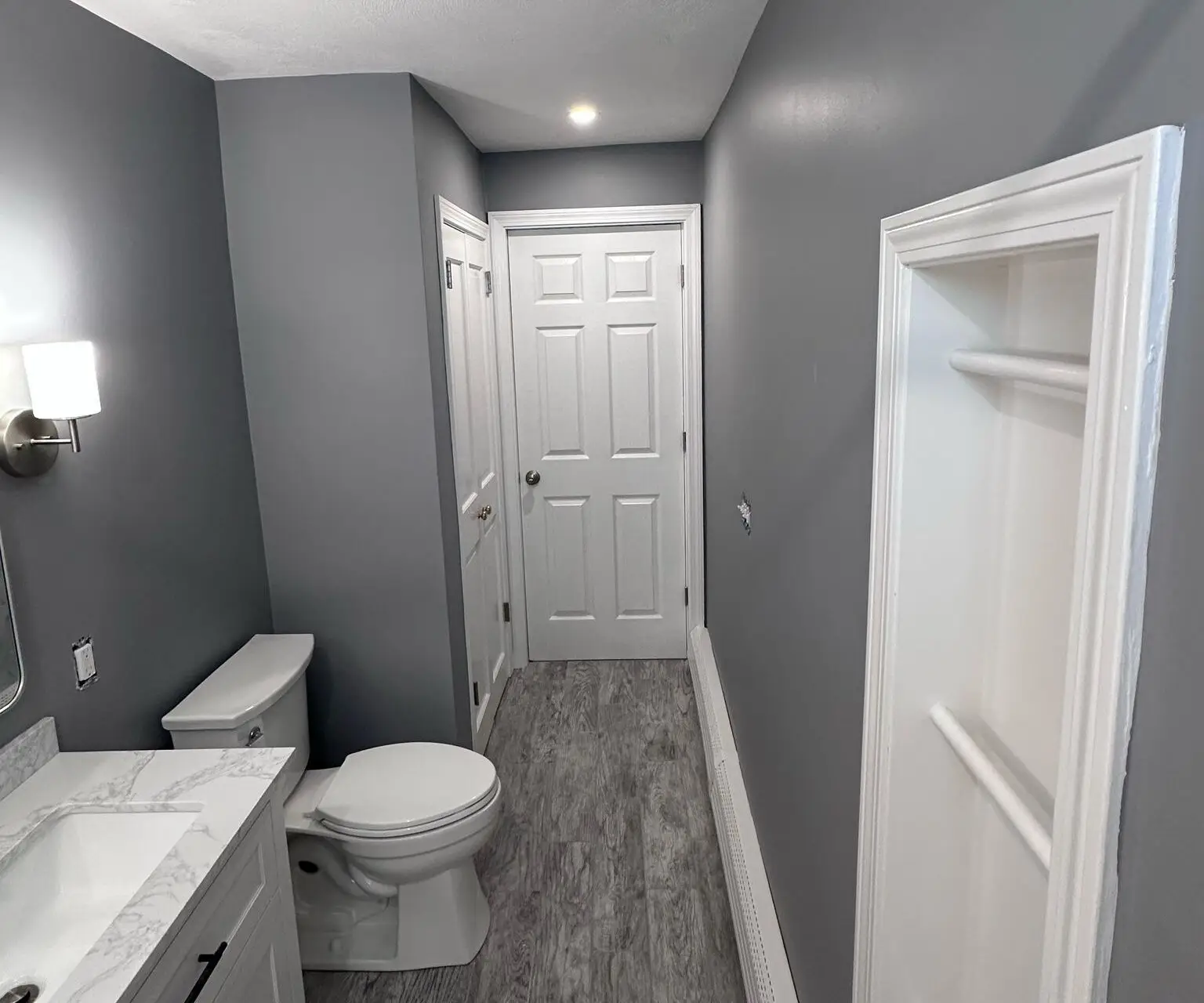
For homeowners in the U.S. tackling a bathroom renovation, a common question arises: can you use standard drywall in a bathroom? While technically possible in some areas, it’s generally not the best choice due to the unique moisture challenges bathrooms present. Understanding the differences between drywall types, their risks, and superior alternatives is crucial for a durable, mold-free bathroom that stands the test of time.
Regular drywall vs. Greenboard & moisture-resistant drywall
Not all drywall is created equal, especially when it comes to moisture.
- Regular Drywall (White or Gray Board): This is standard gypsum board with paper facing. It’s inexpensive and easy to install, but its paper surface and gypsum core are highly susceptible to absorbing moisture. Once wet, it becomes a prime breeding ground for mold and can quickly deteriorate, soften, and crumble.
- Greenboard (Moisture-Resistant Drywall): This type features a water-resistant paper facing (often green or gray) and a treated gypsum core designed to repel moisture better than regular drywall. It’s an upgrade from standard drywall for bathrooms and other damp areas, but it’s not waterproof. While it resists moisture, it can still support mold growth if it gets consistently wet.
- Moisture-Resistant Drywall (Fiberglass Mat Gypsum Board/Purple Board): Newer, more advanced moisture-resistant drywall (like Georgia-Pacific’s DensShield, USG’s Sheetrock Brand UltraLight Mold Tough, or National Gypsum’s PermaBase BRAND Paperless Drywall) often uses a fiberglass mat instead of paper facing. This makes it significantly more resistant to mold and moisture than greenboard, and it offers better performance in high-humidity areas. This is often colored purple, blue, or other distinct shades depending on the brand.
When is regular drywall acceptable?
While generally discouraged, regular drywall can sometimes be acceptable in very specific, low-moisture areas of a bathroom.
Adequate ventilation & sealing paint
- Crucial Factors: For regular drywall to survive even briefly in a bathroom, excellent ventilation is non-negotiable. This means a properly sized, powerful exhaust fan that is used every time the shower or bath runs, and for at least 15-20 minutes afterward, to quickly remove humid air.
- Sealing Paint: All surfaces of regular drywall must be primed with a mold-inhibiting, moisture-resistant primer followed by two coats of bathroom-specific paint (like satin or semi-gloss latex paint). These paints form a harder, more washable, and somewhat moisture-resistant barrier. However, this is a surface-level defense and won’t protect against sustained moisture.
Ceiling vs. Wet walls
- Ceiling: Regular drywall is more acceptable on a bathroom ceiling than on walls, provided the bathroom has good ventilation. Ceilings are less likely to experience direct water spray or splashing.
- Walls: Regular drywall should never be used in areas of direct water exposure, such as inside a shower enclosure, around a tub surround, or behind a sink where splashing is constant. For other wall areas in a bathroom (e.g., behind the toilet or vanity where splashes are minimal), it might suffice if ventilation is excellent and it’s properly primed and painted. However, choosing a moisture-resistant drywall is always a safer bet.
Check it out: Best drywall options for bathroom ceilings
Risks: Mold, deterioration, maintenance before problems
Using regular drywall in a bathroom, even with precautions, carries significant risks:
- Mold Growth: The biggest risk. Paper-faced drywall is an ideal food source for mold spores when moisture is present. Mold can grow quickly, spread, and pose health risks.
- Deterioration: Once regular drywall absorbs moisture, the gypsum core can soften, sag, and eventually crumble. This compromises the structural integrity of the wall.
- Peeling Paint: Moisture trapped behind the paint can cause the paint to bubble, crack, and peel prematurely.
- Hidden Damage: Problems often start unseen, behind tiles or within wall cavities, leading to extensive and costly repairs once visible signs of mold or damage appear.
- Constant Vigilance: It requires diligent maintenance, immediate cleanup of any leaks or spills, and consistent use of the exhaust fan to prevent issues.
Best practices for installation
Regardless of the drywall type, these best practices ensure the best performance in a bathroom:
Sealing primer
- Always use a mold-inhibiting, moisture-resistant primer on all drywall surfaces, especially in bathrooms. This seals the surface, improves paint adhesion, and provides an extra layer of defense against moisture.
Additional coating in wet areas
- Shower/Tub Surrounds: In areas of direct water exposure (inside the shower, around a tub), drywall (even greenboard or fiberglass mat board) is typically not enough. These areas require a waterproof backer board like cement board or fiberglass mat gypsum board (like DensShield), specifically designed for tiling in wet areas.
- Liquid Waterproofing Membrane: Over cement board or fiberglass mat gypsum board, a liquid-applied waterproofing membrane (e.g., RedGard, AquaDefense) is highly recommended. This creates a continuous, seamless waterproof barrier before tiling.
When to choose greenboard, cement board, or pink drywall?
Choosing the right material for the right area is key to bathroom longevity.
- Greenboard (Moisture-Resistant Drywall): A good choice for general bathroom walls and ceilings outside the direct shower/tub area, especially in half-baths or low-use full baths with good ventilation. It’s a step up from regular drywall at a modest cost increase.
- Fiberglass Mat Gypsum Board (e.g., Purple Board/Paperless Drywall): A superior alternative to greenboard for all bathroom walls and ceilings. Its fiberglass mat facing makes it much more mold-resistant and durable in high-humidity environments. Often referred to as “paperless drywall.”
- Cement Board (or Fiber Cement Board): This is the gold standard for wet areas (shower walls, tub surrounds, behind sinks where constant splashing occurs). It’s made of cement and reinforcing fibers, making it completely waterproof and impervious to mold, rot, or swelling from water exposure. It’s the ideal substrate for tile in showers.
- Pink Drywall (Fire-Resistant/Type X): While not directly moisture-related, Type X drywall is thicker and contains glass fibers for increased fire resistance. It’s sometimes used in bathrooms for fire code compliance in certain multi-family dwellings or between a bathroom and a garage, but it doesn’t offer specific moisture benefits over greenboard or paperless drywall.
Cost-benefit & compliance with building codes
- Cost-Benefit: While moisture-resistant drywall and cement board are more expensive per sheet than regular drywall, the added cost is minimal compared to the potential expense of mold remediation and structural repairs caused by using the wrong material. It’s a small upfront investment for significant long-term peace of mind and protection.
- Building Code Compliance: Many U.S. local building codes mandate the use of moisture-resistant drywall (at minimum greenboard) or cement board in specific bathroom areas, especially wet zones. Always check your local codes before starting a renovation to ensure compliance and avoid issues during inspection or resale.
Check it out: How to install drywall on a ceiling? Step-by-step for DIY or pros
In conclusion, while regular drywall can theoretically exist in a bathroom, it’s a gamble. For a durable, healthy, and problem-free bathroom, always opt for moisture-resistant drywall (greenboard or fiberglass mat gypsum board) for general wall and ceiling areas, and cement board or a similar waterproof backer board for all tiled wet zones. This strategic material selection is the foundation of a long-lasting bathroom renovation.
Planning a bathroom remodel that lasts? Deluxe General Services specializes in durable, high-quality bathroom renovations, ensuring the right materials are used for a beautiful and mold-free space. Contact us today for a consultation!